World Water Day, held on 22 March every year since 1993, is an annual United Nations Observance focusing on the importance of fresh water.
World Water Day celebrates water and raises awareness of the 2.1 billion people living without access to safe water. It is about taking action to tackle the global water crisis. A core focus of World Water Day is to support the achievement of Sustainable Development Goal 6: water and sanitation for all by 2030.
Every year, UN-Water — the UN’s coordination mechanism on water and sanitation — sets the theme for World Water Day. In 2026, the theme will be Water and Gender.
Three things to know about water and gender equality
1
The global water crisis affects everyone – but not equally. Where people lack the human rights to safe drinking water and sanitation, inequalities flourish, with women and girls bearing the brunt. It’s time to centre women and girls in water solutions.
2
Women must shape the future of water. Water services must withstand climate change and meet everyone’s needs. We need a transformative, rights-based approach to solving the water crisis, where women’s voices, leadership and agency are fully recognized.
3
Where water flows, equality grows. When women and girls have equal voice in water decisions, services become more inclusive, sustainable and effective. We must invest in women’s leadership to make water a force for a healthier, more prosperous, gender-equal future that will benefit us all
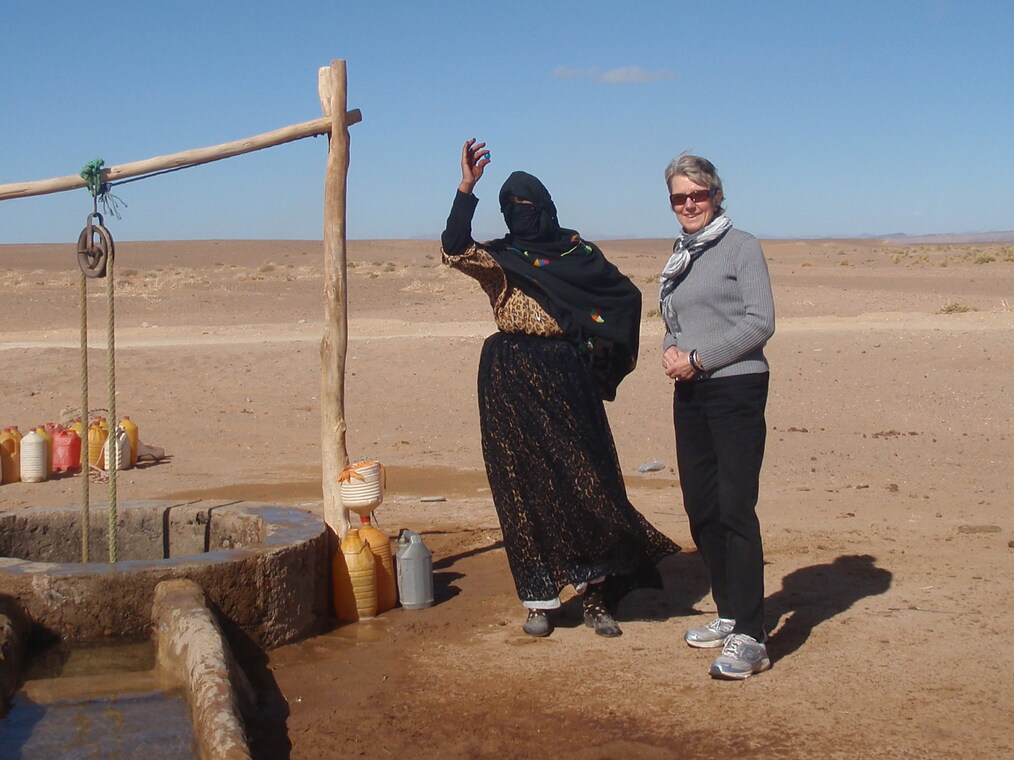 |
Women-led Fog Harvesting for a Resilient, Sustainable Ecosystem | Morocco
While they have lived for centuries on rain and well-water, today the people of Ait Baamrane, on the edge of the Sahara Desert, rely only sporadically on this groundwater because it is no longer being replenished due to intense droughts. This is making life in this region increasingly difficult.
Dar Si Hmad, a women-led NGO in Morocco, designed and installed what is now the world’s largest operational fogwater harvesting system. It is an innovative solution to persistent water stress where fog is abundant, a technique inspired from ancient water practices. The Dar Si Hmad project provides accessible potable water to more than 400 people in five villages, most of them women and children.
The unique fog harvesting project is a successful model of a locally-driven, participatory climate change adaptation initiative, providing an environmentally friendly water source to combat the effects of desertification.
Source: United Nations: Climate Change / Climate action / Momentum for change / Women for results